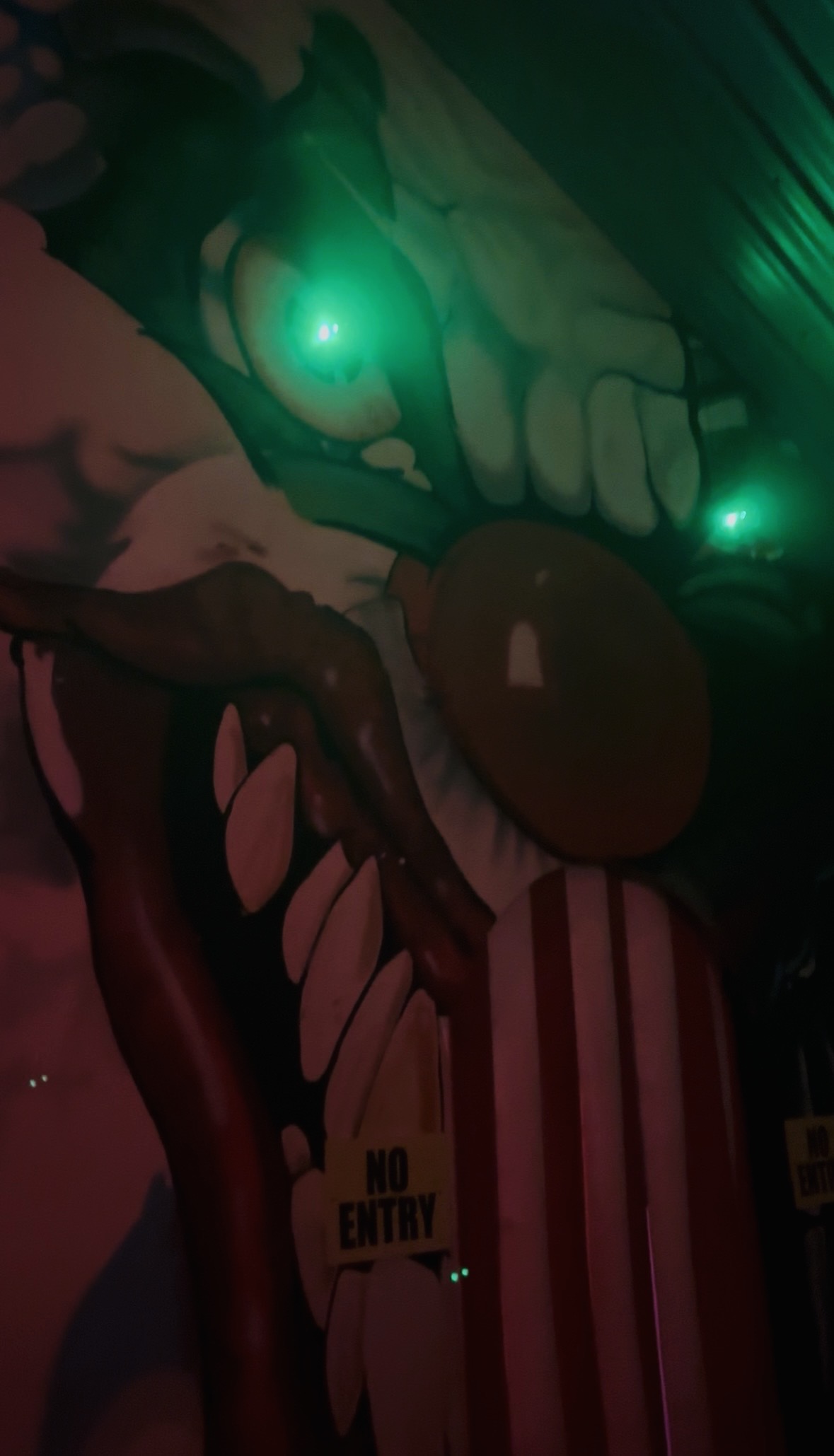
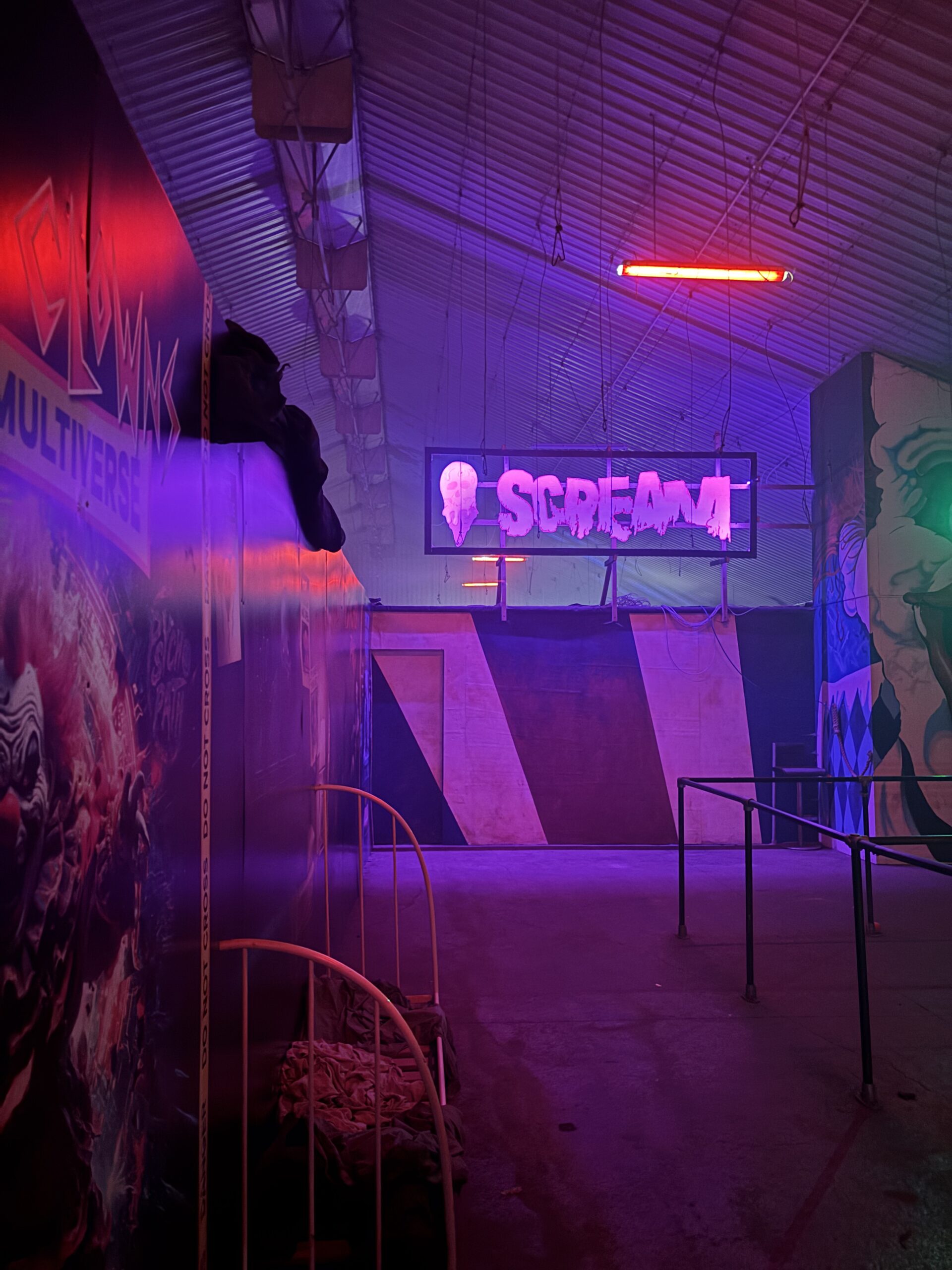
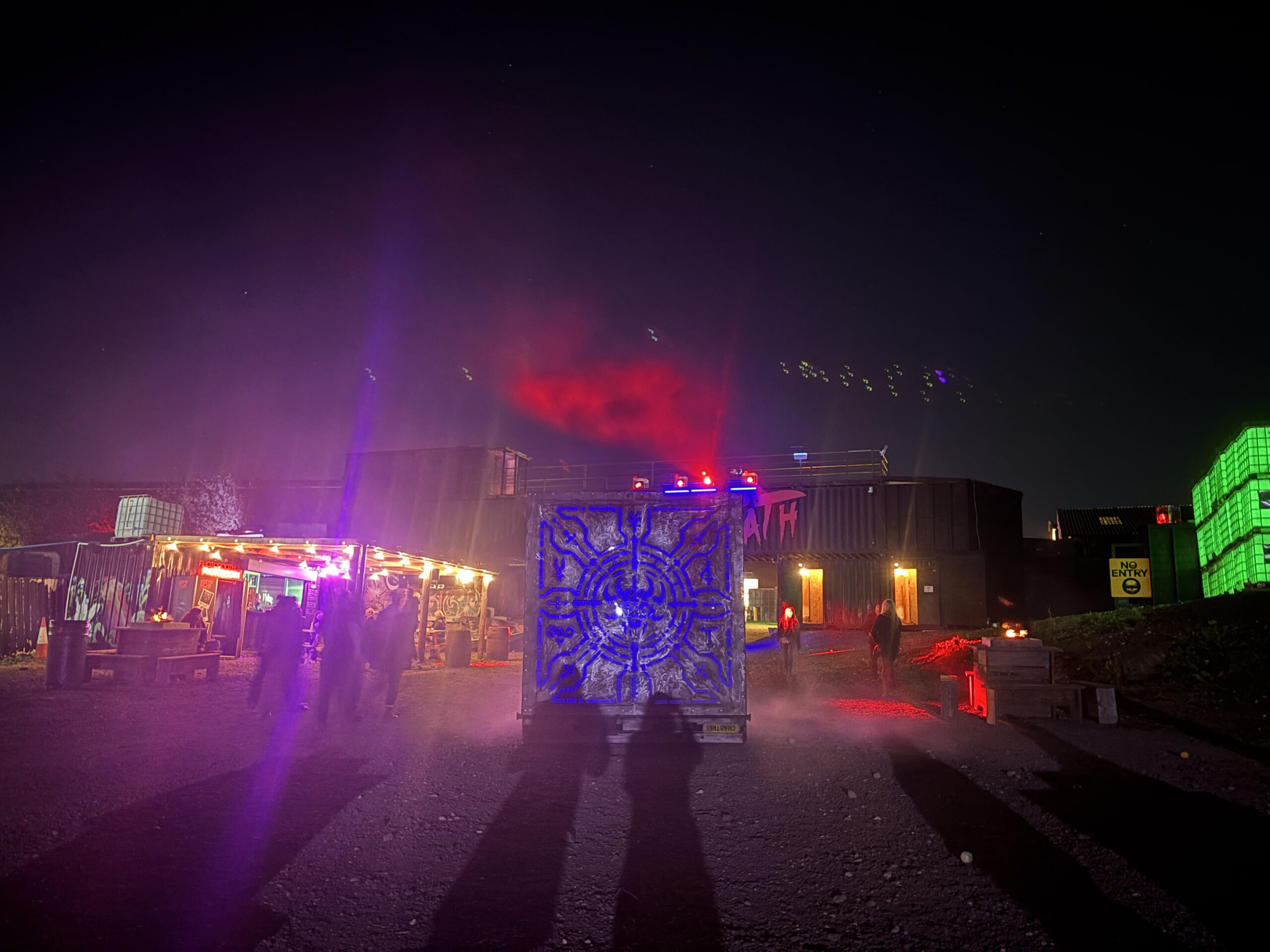
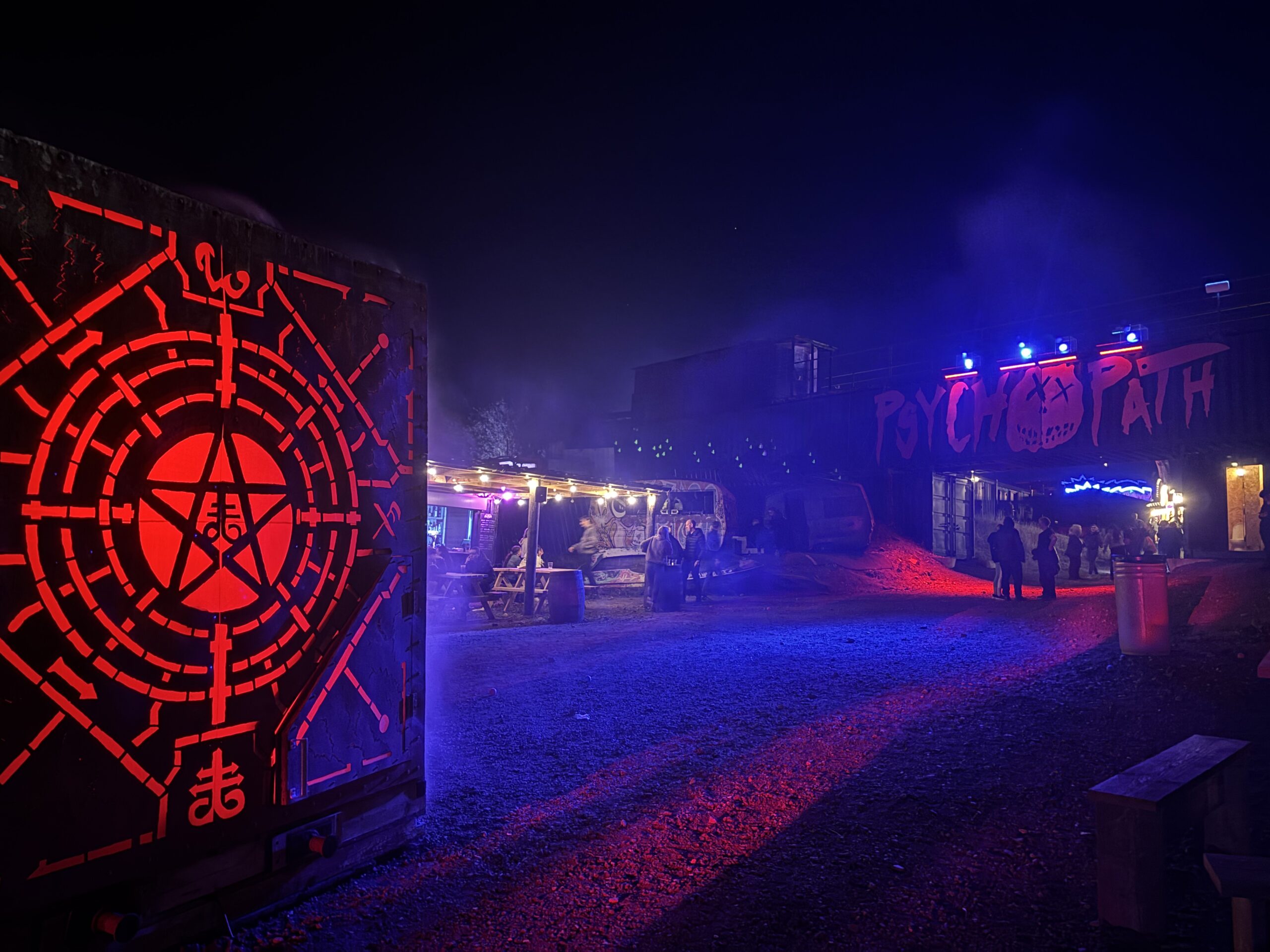
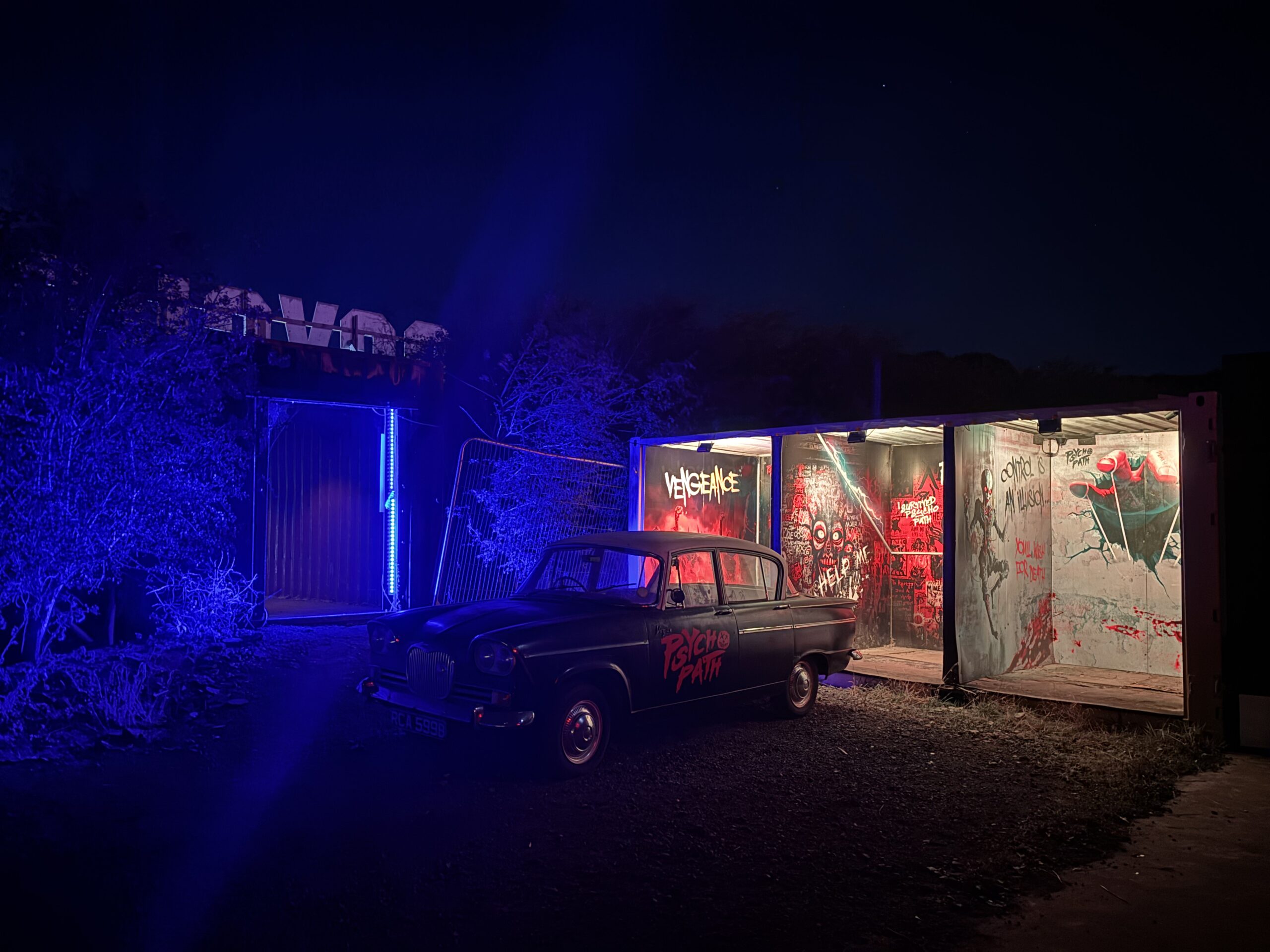
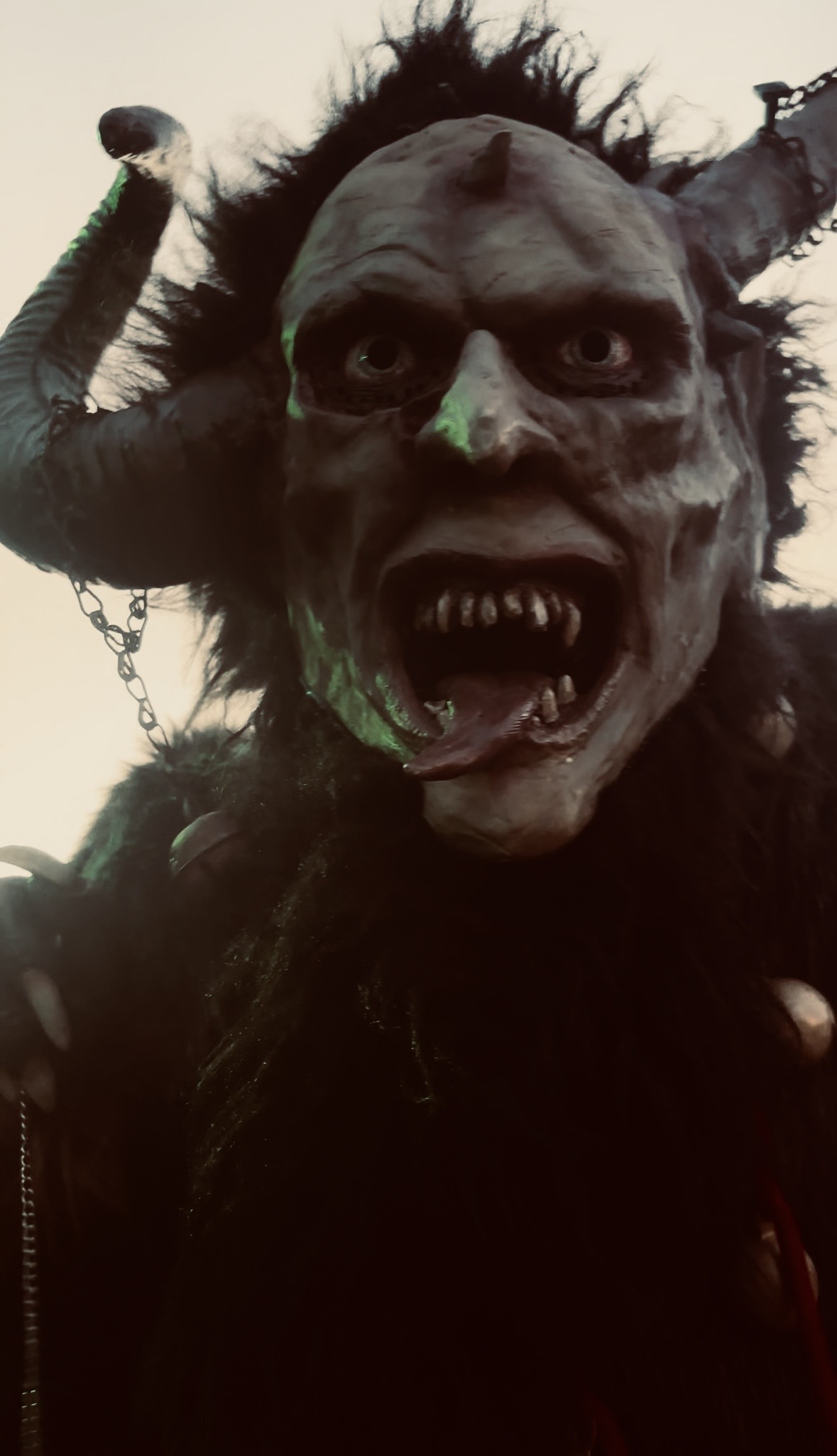
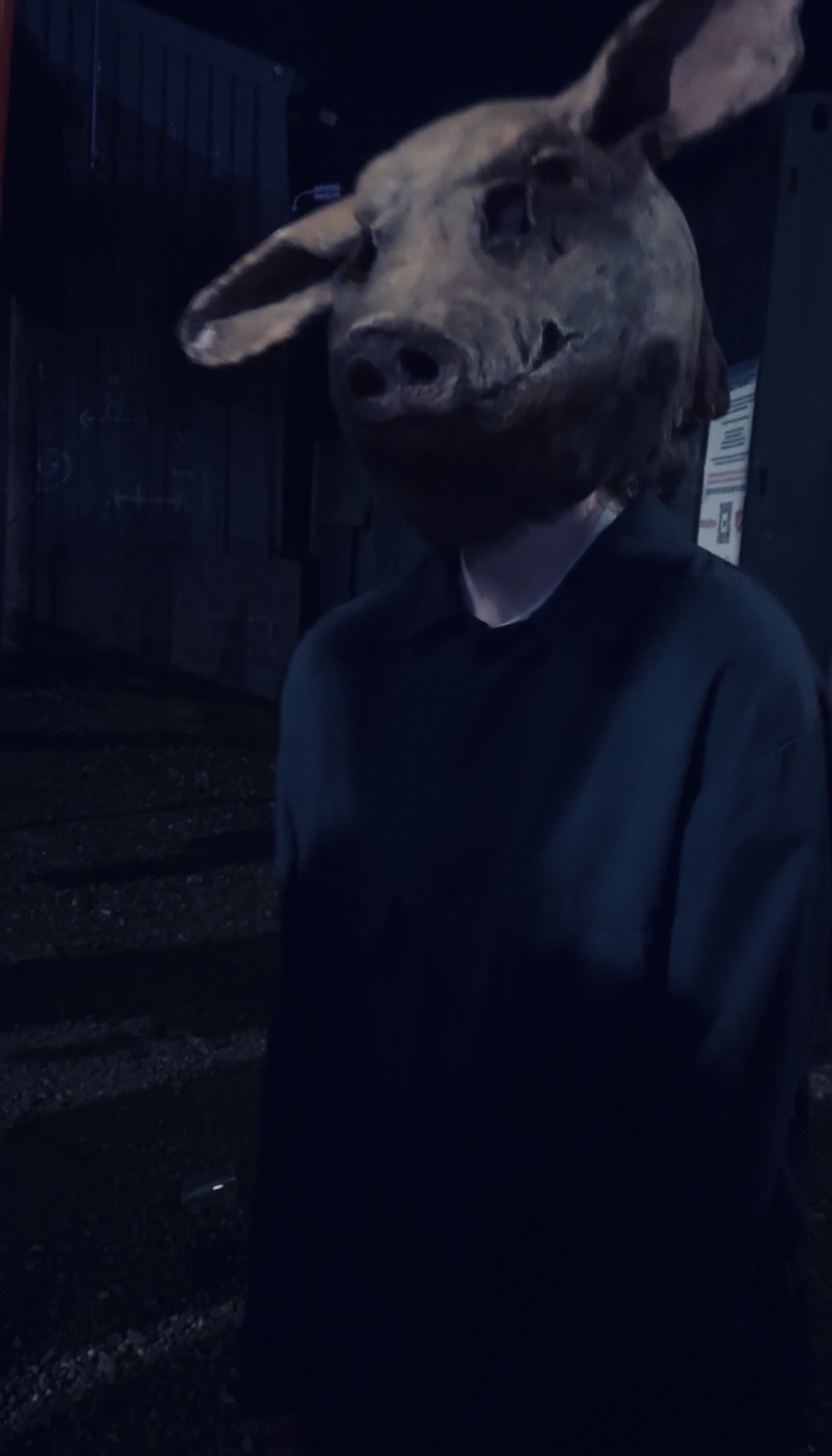
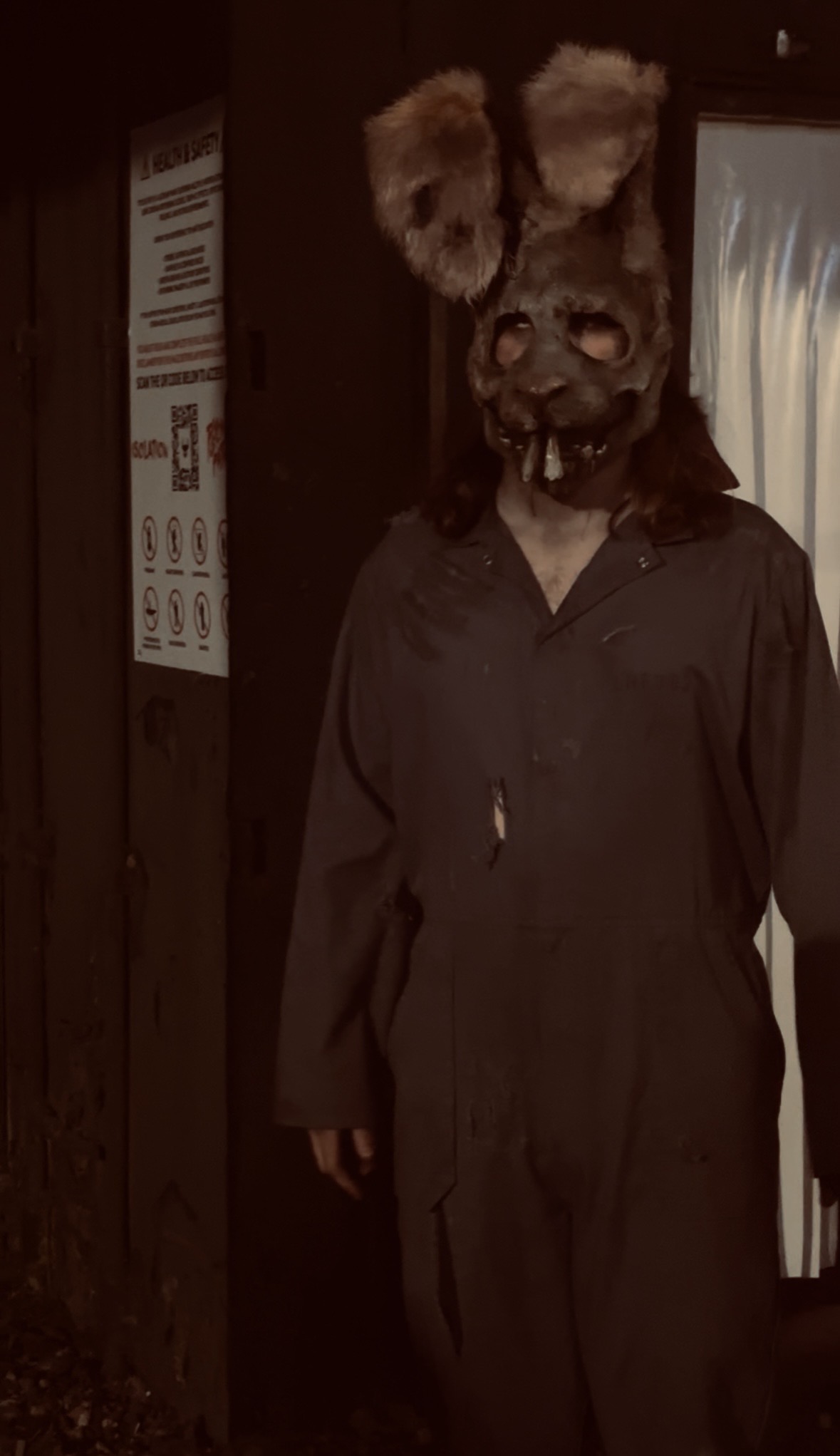
We found Psycho Path to have a great variety of effects and scenic design. “iScream’s” extended maze had us once again clambering through the back of ice cream vans, clowns just around the corner, whilst an entire white-out room of smoke with soft pink light created a disorientating, almost candy floss effect. Ballpits, slides, swinging punching bags, and a birth canal all feature, bringing a carnivalesque chaos. The soundscape was of a circus-type with ice cream van melodies peppered in. In the final part of this maze, set design was simpler, with a series of circus flaps in red and white stripes that you must traverse or else become lost.
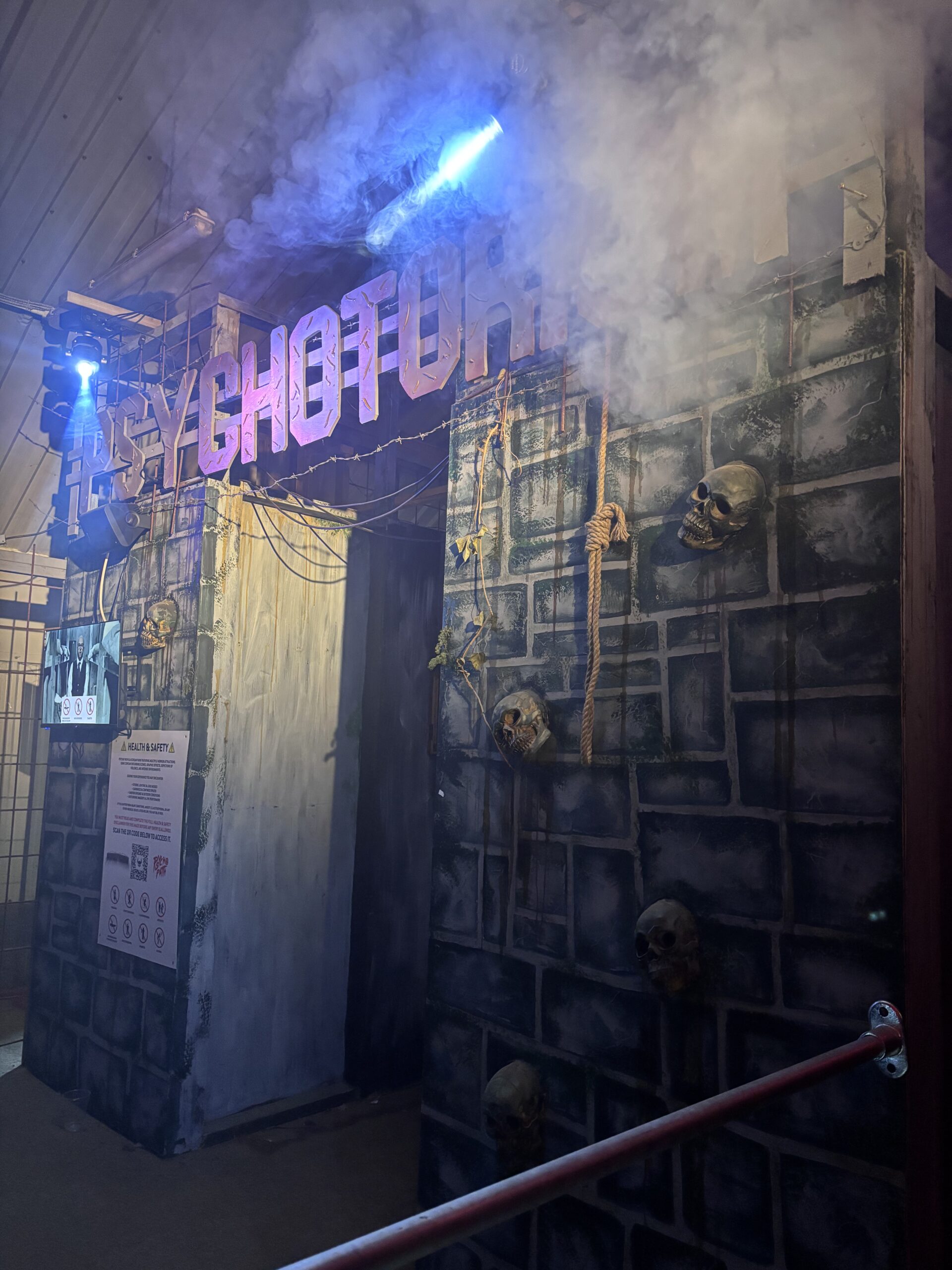
“Psychotorium” bore resemblance to its previous iteration. It includes the requisite phone call, with a segment of eerie hold music that we have often heard on our own holds, isolated and banging cells with doors which open only when ready, and the shock of a pyrotechnic finish that was most impressive. Some elements were still in process, with the occasional phone not operating (although this was well-worked into the storytelling), and shock pads that were more for show (again, these may be activated later in the season). Prepare also for close contact air cannons on your way to “cremation” and clambering up narrow tunnels. A dark ambient minimal music bathes the scene as you go.
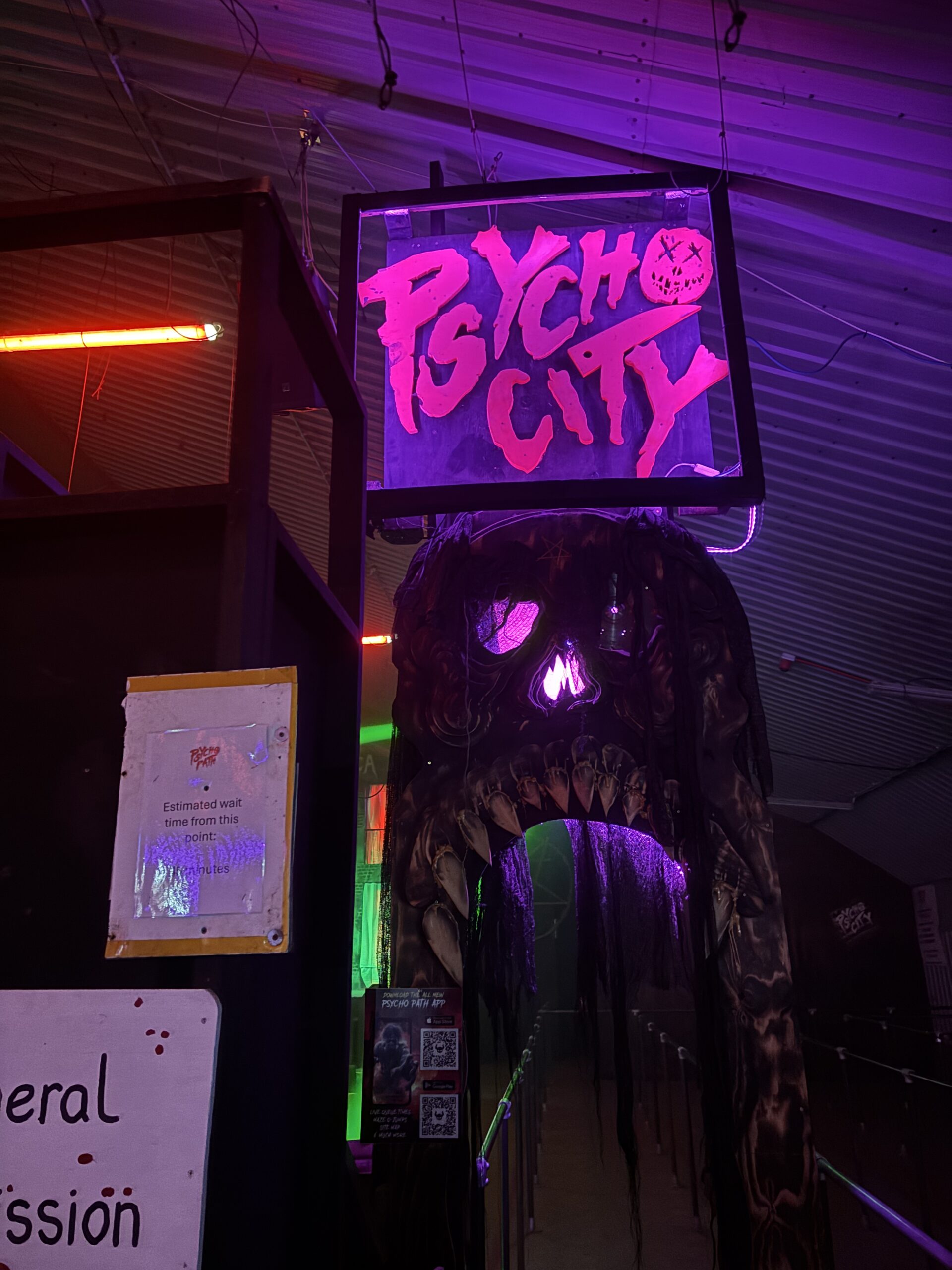
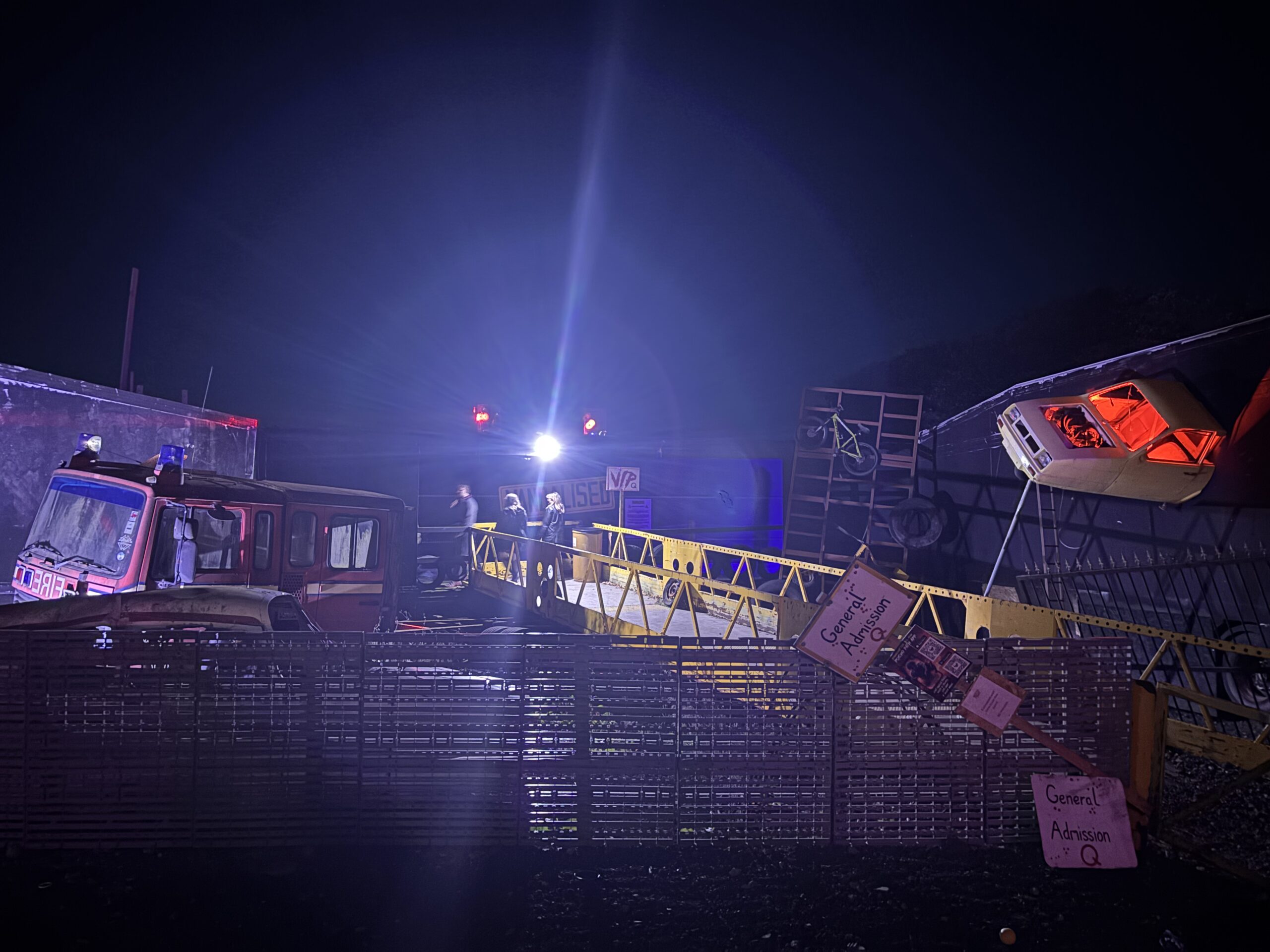
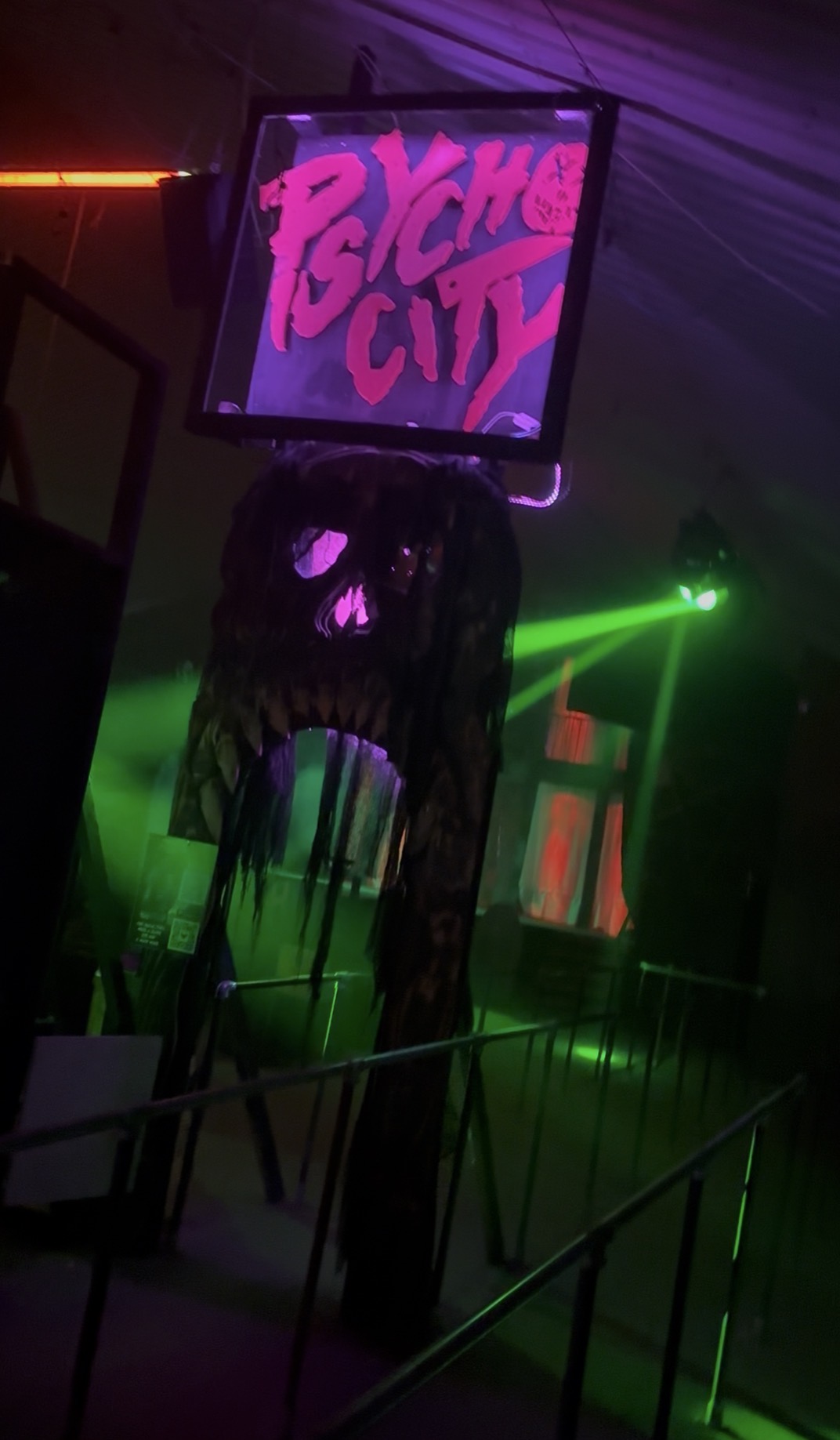
In “Psycho City” we came into areas of incredible darkness. We slightly wish we could have seen more of the sets, but this did add atmosphere to the scenes. Coupled with soundscapes of pulsing emergency sirens and alerts, as well as lights and smoke toying with abandoned cars, the apocalypticism felt most real.
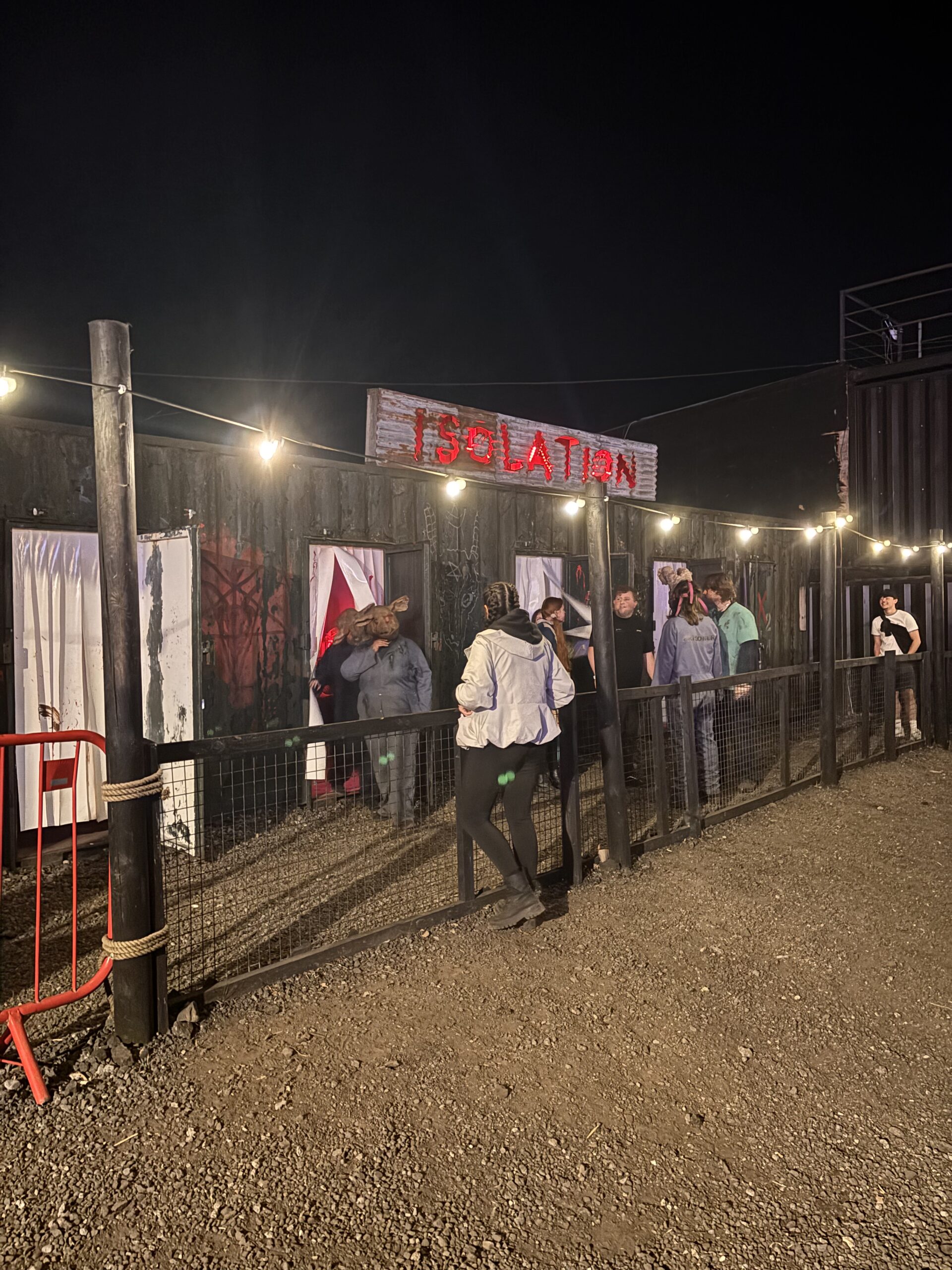
“Isolation” offered one of the more interactive effects of the night. Although each experience is different depending on the door you choose, The Gatekeeper in one asks you to put your hands into a series of dummies, each filled with a different disgusting material, whilst you are required to name the mannequins as you search for keys hidden between their “guts”. It is a nicely constructed diversion with stomach-churning sensory touch effects, with the interaction itself becoming part of the storytelling rather than simply a means of finding your way through.
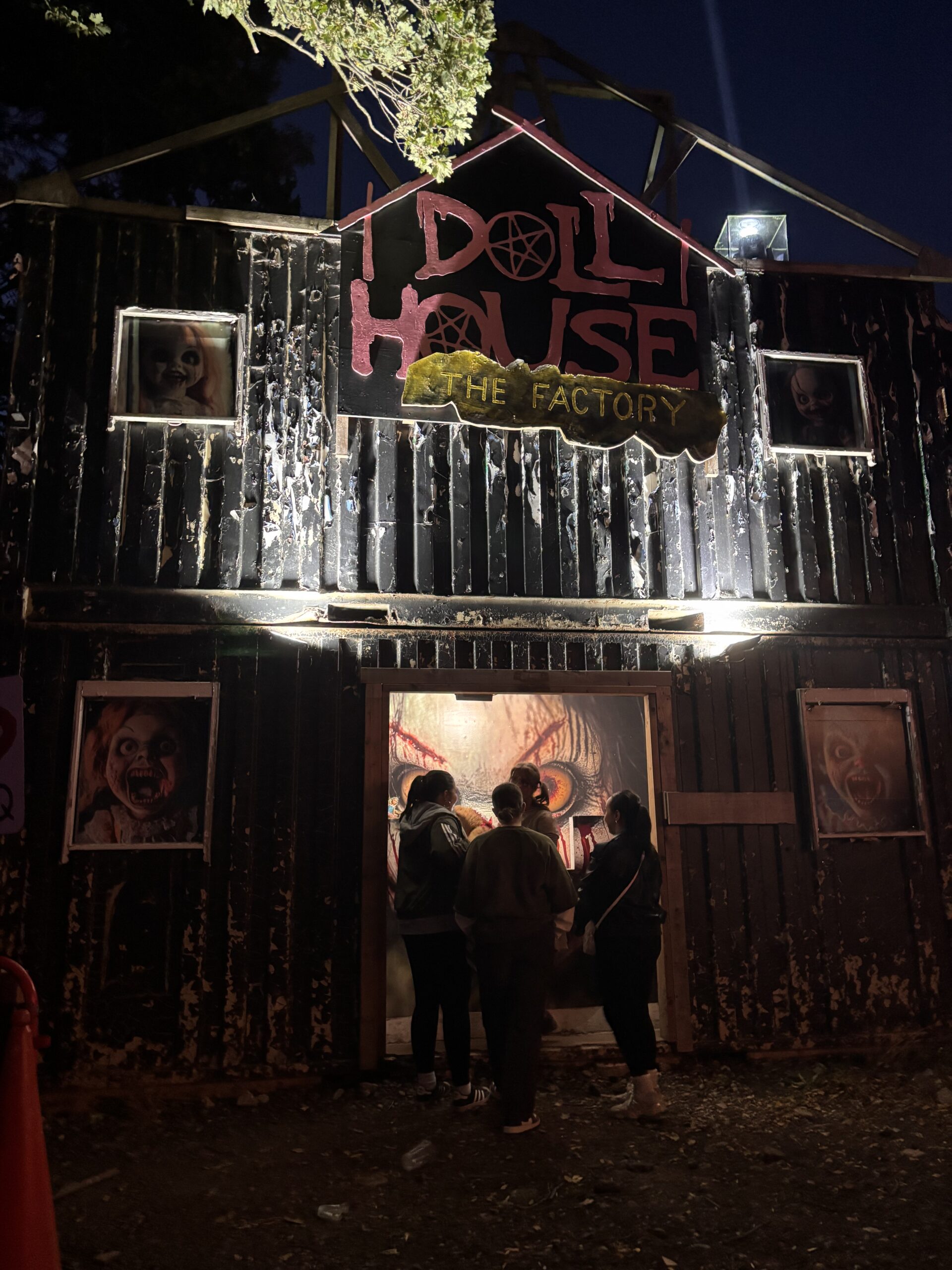
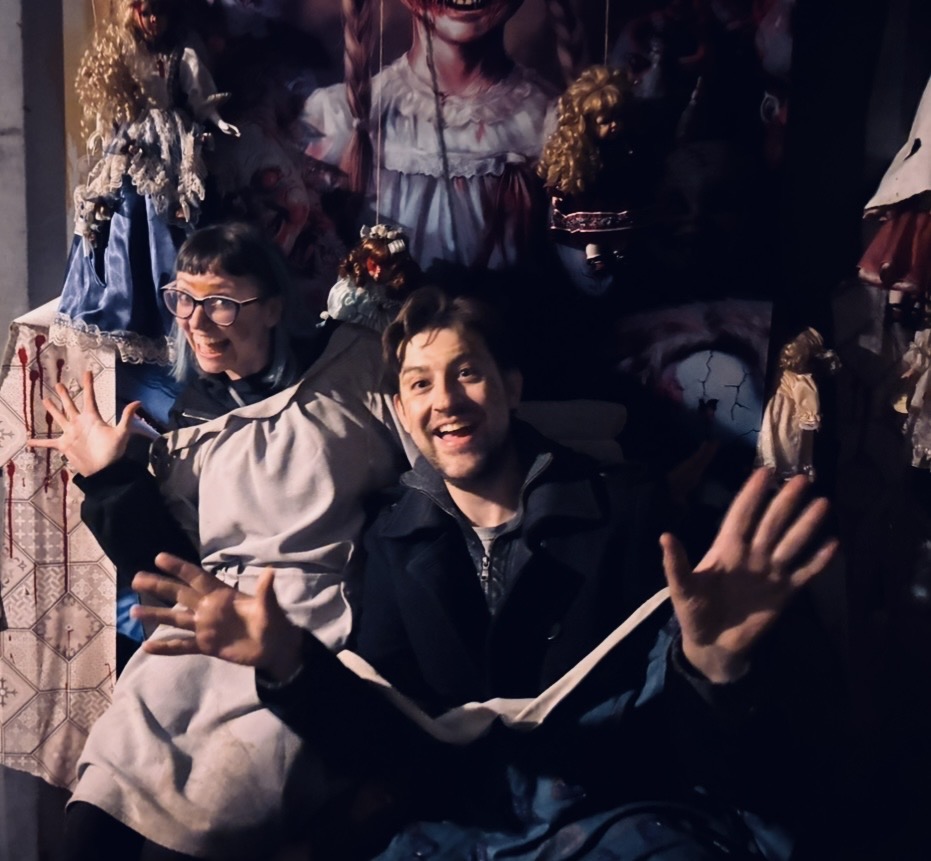
“Doll House: The Factory” is an extended, winding maze which can become quite confusing at spells, but this works well with its odd, dreamlike air. Lullaby music accompanies multicoloured fairy lights and sections populated by demonic teddies and other stuffed toys with bloody fangs. There were also some changes from our previous visit to this factory, including being dressed up as toys and having photos taken of us (from our own phones). The extended section towards the end was particularly successful, with a series of passages, strobes, and dressmaker’s dummies creating a suitably unsettling ending.
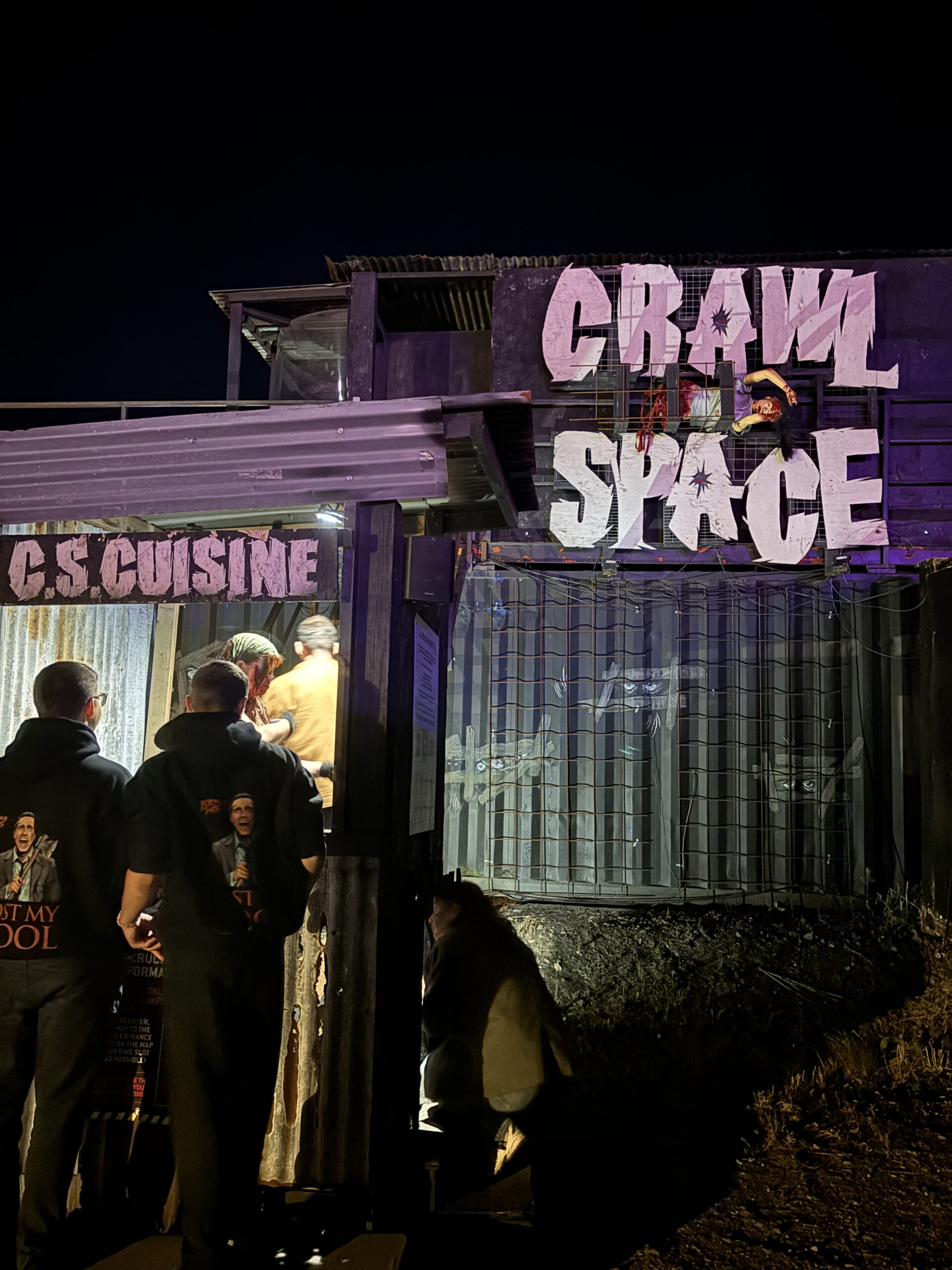
“Crawl Space” continues to make good use of physical practical effects, with new rooms added towards the finish of the maze, including a freezer-like area and two new ballpits. The latter were great fun, with both of us splashing around in the balls and throwing them into the air, but the more effective element was the feeling of the environment itself closing in. Walls actually move, forcing you to crawl through increasingly confined areas, creating a surprisingly physical experience which includes some rope climbing as you work your way across the condemned home.
“Vandalised” begins with the suggestion that you have been kidnapped and placed inside a van, resulting in the majority of this haunt being mobile. Each individual has a different experience, but of us one remained in the van and was taken to several locations, whilst the other was locked in a barren shed for a considerable time. The van itself is dark and you grab a padded pole for support. The sense of confinement is enhanced by the van itself appearing to smoke as though it is overheating.
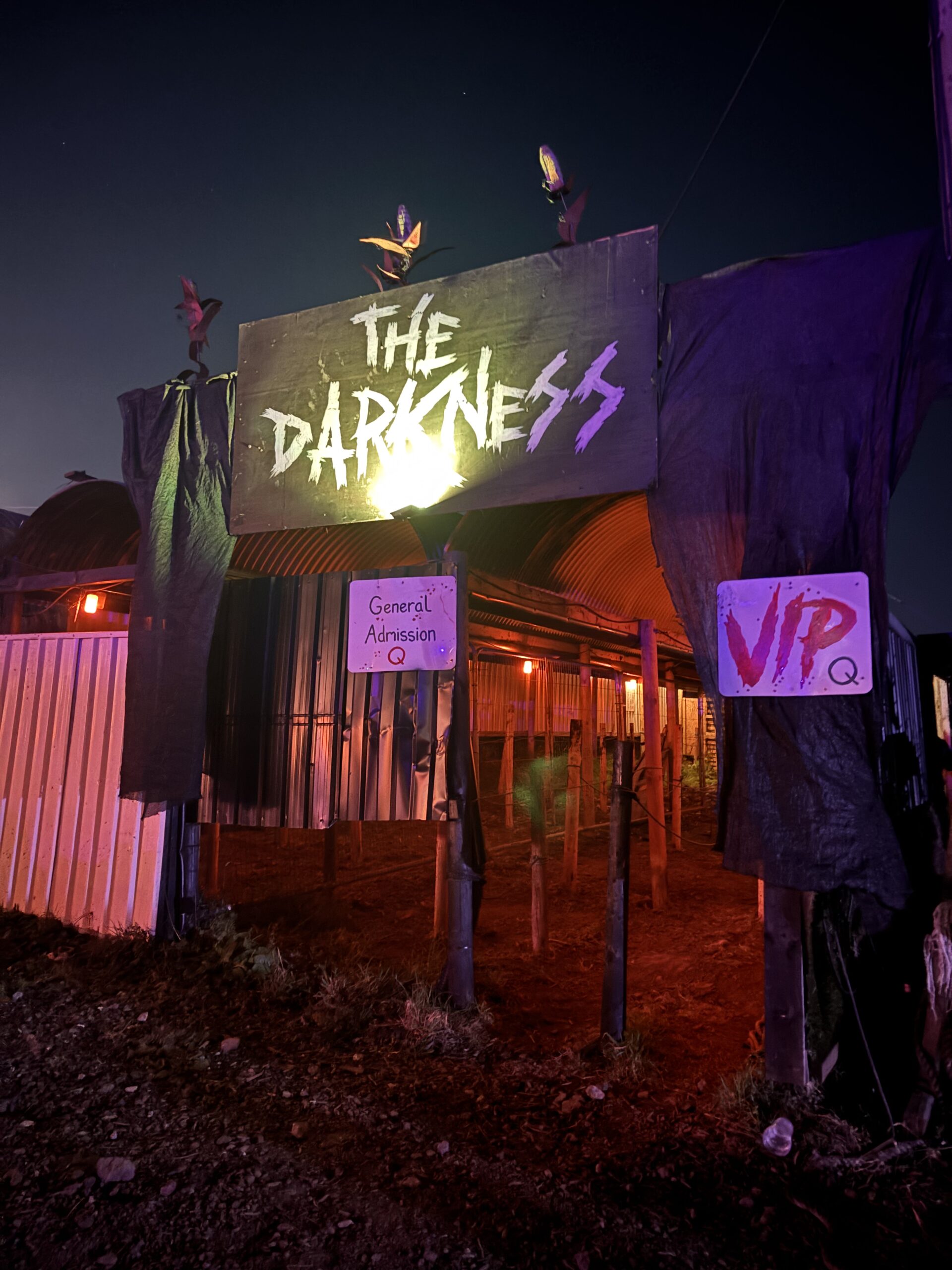
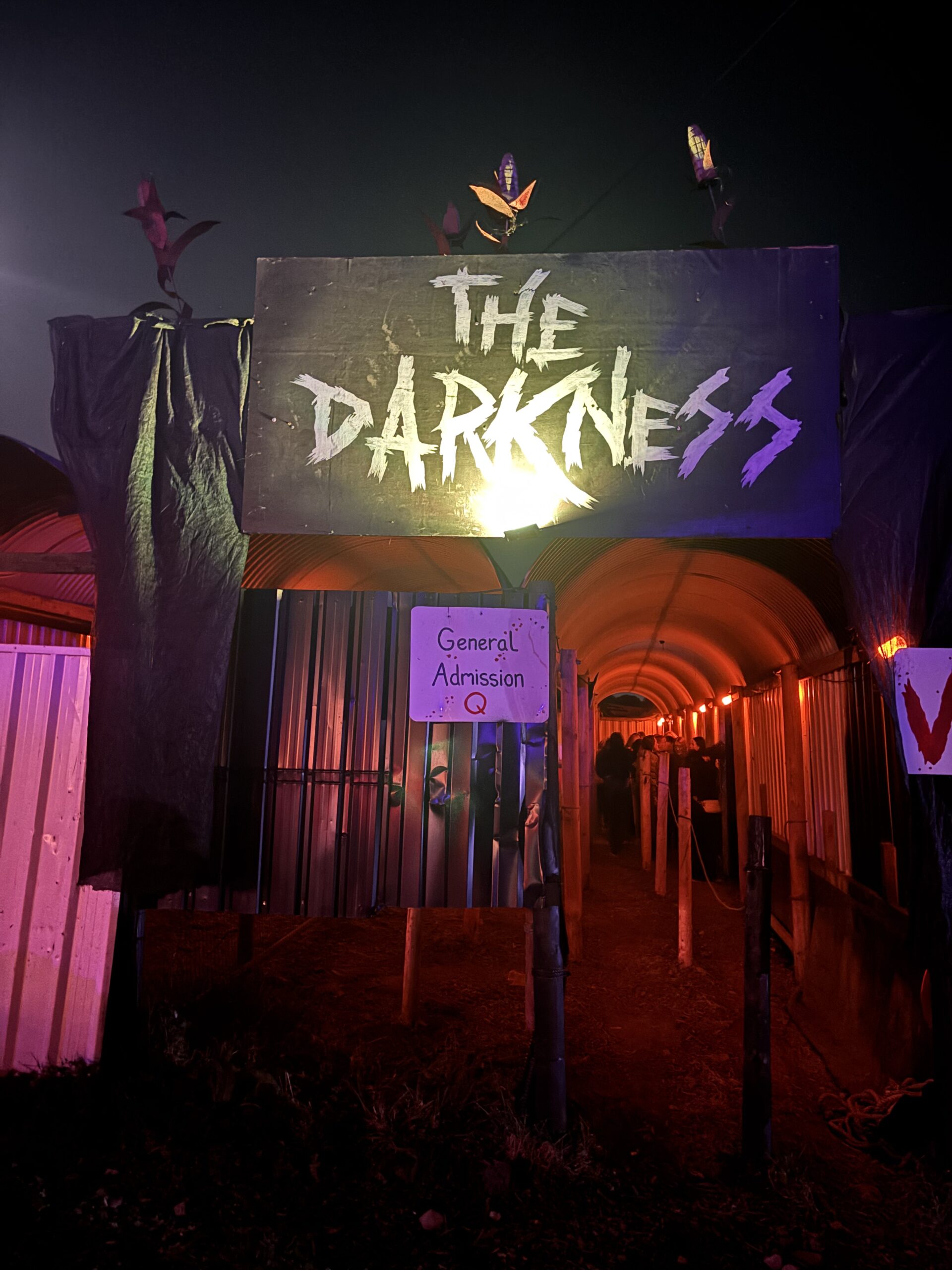
“The Darkness” is, as the name would suggest, a blindfolded maze and so effects are markedly more tactile. Twigs and grass brush against you as you tread over piles of hay as hands reach out to grab you, at the same time as screams suggest the damning of souls. Touch is used throughout, alongside changes in temperature between hot and cold, making this one of the more atmospheric experiences.
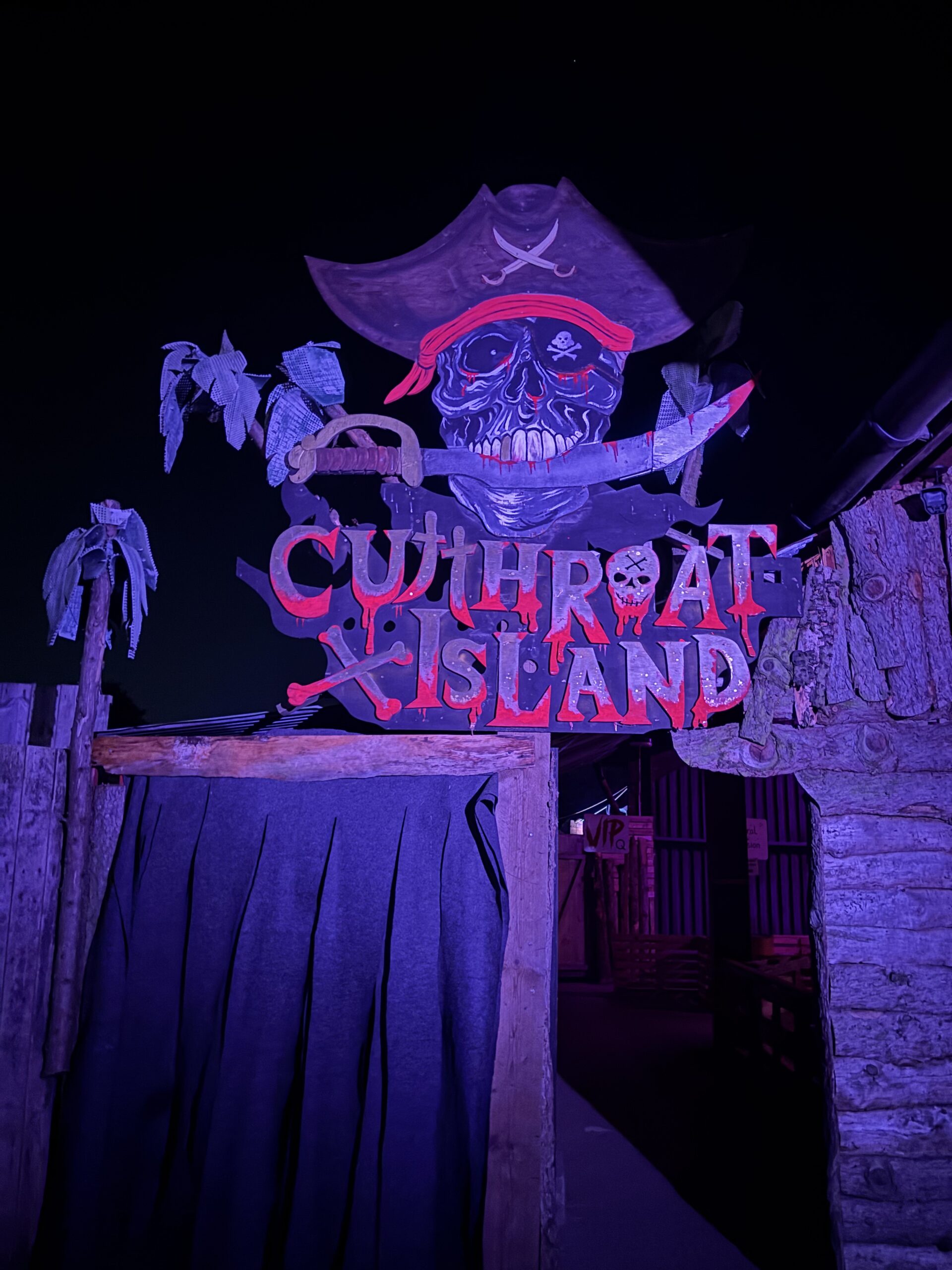
“Cutthroat Island” is one of the most impressive examples of scenic design across Psycho Path. The entire environment is built around a piratical location, including an impressively constructed pirate ship that has come to ground, with the sound of surf, the marine, and cutlasses helping to plunge you into the illusion. Illumination and sound design work particularly well together, creating the impression that you have genuinely stepped aboard a ship. It is a wonderfully immersive setting, and one where the scale and detail of the set do much of the work, spanning not only a pirate ship, but graveyard, tavern, and the depths of the briny deep.
See Less